
Because There Can Be More To The Good Life, A Higher Level, A More Abundant Life -
From Mere Wealth To Prosperity
Wealth preserving economic insights make living the best of the good life prudent wealth management


SUCCESS SECRETS OF THE SUPER RICH
Ensuring generational prosperity during political and economic uncertainty
Or
How to go"green" in "America's new golden age of Trump by successfully navigating the OBBBA, AMT, & TMT!

47 Official Photo

Gulf Of America Map

Draft of OBBBA on an American flag
47 Official Photo
The 1% can now pay less than 1% in federal tax.
But do they? Can you? Should you?
How low do you need to go to stop overpaying your taxes & chart a course for greater prosperity?
Changes are certainly on the way. Some welcome, some maybe not so much.
Smooth sailing or stormy seas? Starting with the One Big Beautiful Bill Act (OBBBA), many are likely to find themselves in unfamiliar or uncharted waters - figuratively and literally.
For example, while in the four (4) years 2018, 2019, 2020, & 2021, the most prosperous Americans paid little to no income tax on millions of dollars of income under TCJA, they don't know they can pay less than 1% under the OBBBA.
Regarding the success secrets of the wealthy and their taxes, the famous maxims, "Change is the only constant in life," attributed to the Greek philosopher Heraclitus (c. 500 B.C.E.), Benjamin Franklin's, "In this world nothing can be said to be certain, except death and taxes", and the French writer Jean-Baptiste Alphonse Karr's "The more things change, the more they stay the same." are as true now as ever- even after the passing of the OBBBA.
It's no secret; in fact, it's well documented. While some of the wealthiest can pay little to no tax, many still miss the boat -so to speak.
THE SIREN SONG OF THE OBBBA
Experienced mariners know that things are not always as they seem.
For too many, the initial promises of the OBBBA, much like the sirens of Greek mythology, could be catastrophic.
On the surface, the One Big Beautiful Bill Act (OBBBA) sounds like a perfectly calm, safe harbor for the top 1%.
The headlines promise permanent tax cuts, giving the appearance of smooth sailing for high earners. But beneath what looks like an open, inviting lagoon lies a jagged, hidden regulatory reef: the new Alternative Minimum Tax (AMT) clawbacks.
For incomes over $500,000, the OBBBA imposes an aggressive exemption wipeout that spikes your Tentative Minimum Tax (TMT). While traditional CPAs treat this as inevitable, proactive structuring into active enterprises like maritime commerce or aviation leasing can dissolve that floor and lower your effective rate below 1%.
Chart Your Safe Course: Read the Full OBBBA Navigation Guide
SUCCESFULLY NAVIGATE AMT & TMT
If you are in the top 1% earning millions, you have likely already hit the AMT wall.
You already know that the Alternative Minimum Tax (AMT) and Tentative Minimum Tax (TMT) are designed to act as an unbypassable floor, routinely trapping high W-2 earners and massive capital gains at a mandatory 26% to 28% rate. Most conventional tax planning simply accepts this floor as an absolute, strict limit on your prosperity.
We don't.
While the One Big Beautiful Bill Act (OBBBA) creates an aggressive parallel tax structure, those limits are only strict if you remain confined to traditional personal deductions. We operate on a completely different plane. By collaborating with your existing advisors to position your capital within active, cross-disciplinary commercial enterprises—such as maritime commerce, aviation leasing, or environmental infrastructure—the practical reality is that the effective tax of the TMT floor essentially dissolves.
The same is true for the AMT framework. We acknowledge its boundaries, but we also know how to legally navigate right through them. so that its possible to produce an effective federal tax rate down to less than 1%.

And now with the One Big Beautiful Bill Act (OBBBA), certainly for the top 1% or anyone with an annual income over $500,000, and likely for those in the 10% (income above $250,000), it is prudent and wise to ask a few questions.
-
Did your current team of tax, financial, and investment advisors ever discuss with you how to pay no tax in the four (4) years 2018-2021?
-
Did any of your advisors discuss what those tax savings could become if properly invested or what else you could do with those tax savings that would be more rewarding?
-
If not, why not?
-
Is it possible your current advisors are now overlooking other tax-saving opportunities? What could that be costing in unnecessary taxes and lost investment income?
-
If your current advisors knew how you could pay less than 1% in federal tax, they would have already discussed it with you, wouldn't they?
-
If your advisors didn't discuss how to pay no income tax for the four years 2018,2019,2020 & 2021 under TCJA, will they help you pay as little as 1% begining in 2025 under OBBBA?
You didn't build the kind of wealth that puts you in the top 1% by leaving money on the table. You also don't ignore no-lose opportunities. Your tax strategy shouldn't either.
For qualifying taxpayer prospects with $500,000+ in adjusted gross income, we guarantee to identify at least $50,000 in new, qualifying, implementable federal tax strategies you are not currently using.
If we can't, we'll make an in-kind donation of $50,000 in tax strategy services to a nonprofit of your choosing.

HOW DO YOU DEFINE SUCCESS?
 |  |  |
|---|---|---|
 |  |  |
 |
The definitions of success differ. Lower taxes and greater financial freedom are only a part. Yet almost every definition of success contains a financial component- at least up to a certain level.
Afterward, it's generally recognized that increasing income and wealth eventually produces diminishing marginal value and their own unique challenges. This level above financial abundance is often best described as the difference between wealth and prosperity.
The difference between wealth and prosperity can be described as the difference between what you have vs. how well you’re actually doing. Wealth is mostly quantitative: the accumulation of tangible assets, money, and financial resources. Prosperity is broader and more qualitative: a holistic state of thriving that includes wealth along with health, happiness, passion, and purpose. Wealth is measured by possessions, while prosperity is defined by the quality of your life, well-being, and freedom.
Regardless of how success is defined, most agree it's not only illogical or irrational to pay more taxes than legally necessary. Many may also believe it's immoral, especially given what their government does with their taxes.
Then, for others, there can also be a spiritual aspect.
-
"True success is finding God's will for your life and doing it. Being faithful is being successful?" Dr. Bob Jones.
-
"Render to Caesar the things that are Caesar's, and to God the things that are God's." Mark 12:17
Thus, to maximize your success, to have the freedom and resources to accomplish what's important to you, to live like the super-rich, to get the most from the yachting lifestyle, and all the best the good life has to offer, you most likely will need to change what you've been doing and do what the super-rich do.
The easiest, quickest, and surest way to achieve the lifestyle changes you seek often begins with how you pay taxes. You have to start paying taxes like the super-rich.

However, it would be a reasonable mistake to assume that the wealthiest with the best advisors always pay the lowest taxes.
They don't. A prime example is the taxpayer with $45,000,000 AGI, who overpaid his taxes by some $11,800,000 in federal taxes and $700,000 in state taxes. He had the best advisors money can buy.
Some reasons why many of the 1% significantly overpay their taxes when they have the financial and human resources not to are explored herein.
Not the least of which: 1) The tax code changes rapidly, 2) nobody knows everything, and 3) the more sophisticated one's tax and business affairs, the greater the possibility that some things may just slip through the cracks.
According to the Congressional Research Service:
"Of the $1.6 trillion in taxable income reported on returns subject to the top marginal income tax rate of 37% in 2018, $780 billion was taxed at the 37% rate. Out of all taxable income ($9.0 trillion), 8.7% was taxed at the top tax rate of 37%.
Another way to examine the amount of income subject to the top marginal tax rate is to look at tax rates imposed on the income of high-income taxpayers. In 2018, $2.3 trillion in taxable income was reported on returns with AGI of $500,000 or more ($1.6 trillion was reported on returns with AGI of $1 million or more). Of total taxable income reported on returns with AGI of $500,000 or more, 34.2% was subject to the 37% top marginal income tax rate (45.4% for returns with $1 million or more in AGI)."
Likewise, the IRS reports that while less than 1% of the 1% take full advantage of all available tax-saving provisions, they are nevertheless still able to legitimately reduce their taxes significantly- even if it's not as low as it could be.
For example, according to another White House study, the wealthiest 400 billionaire families in the U.S. paid an average federal individual tax rate of just 8.2 percent.
In 2021, ProPublica and Forbes reported that the wealthiest average only about a 3.7% annual tax rate, with some of the wealthiest: Jeff Bezos, Elon Musk, Michael Bloomberg, Carl Icahn, George Soros, Warren Buffett, Bill Gates, Rupert Murdoch, and Mark Zuckerberg often paying no tax at all.
But it's not only for the super-rich.
The same tax code provisions employed by the super-rich are available to everyone.

As demonstrated by the adjacent example, there are many ways in which to legally and ethically pay little to no income tax- even on millions of dollars of income.
The Super-Rich, The 1%, The Working Wealthy, & The Affluent
While there are many ways in which to legally and ethically pay little to no income tax, and the same tax code provisions apply to everyone, there are, however, some minimal income levels that are more practical.
Determining who is rich or in the top 1% of income earners is an interesting question. There is a difference between wealth and income.
In fact, often the relationship between wealth and income is negative. It's not unusual for those with substantial wealth to forgo higher income for increased safety and principal protection. And that includes after-tax yields.
Nevertheless, an annual income of only $35,000 places one in the top 1% of all global incomes.
In the United States, to be in the top 1% depends on where one resides, but generally ranges from about $600,000 to about $750,000.
Obviously, those with higher incomes should generally expect the greatest benefit from taking advantage of all available tax code provisions. Practically speaking a minimum income of about $500,000 is recommended for best results, but as we show, the tax savings from an income of $240,000 can be worth $840,000 because it's not just how much tax is saved, but how those tax savings are invested.

The One, Big, Beautiful Bill Act (OBBBA), signed into law on July 4, 2025 (Public Law 119-21), is a sweeping tax and economic package designed to cut taxes and introduce significant changes to the tax code designed to stimulate economic growth.
But as they say, the more things change the more they stay the same.
In February of 2026 we conducted a little experiment using the publicly available tax systems of three independent tax authorities to see how the OBBBA might impact federal taxes owed by high-income taxpayers in 2025 and 2026.
And we set about using the most difficult scenario: a high-income earner with substantial W-2 income and limited deductions and offsets, such as the Alternative Minimum Tax (AMT), as is common among professional athletes and corporate executives. In an effort to keep it simple, we did not even consider the possibilities of legitimate business ownership.
Experiment Criteria:
-
Filing Status: Single
-
Age: 33
-
Income: $10,000,000 W-2
-
Date: 2/15/26
-
Tax Estimates Prepared By: H&R Block, Intuit, Internal Revenue Service (IRS)


.png)


Conclusion: Under the OBBBA a single tax filer age 33 earning $10,000,000 in ordinary W-2 income can have a total 2025 and 2026 federal tax liability (and without any AMT liability) ranging from $3,700,000 to just $88,000. That's an effective tax rate of over 37% to less than 1%.
While we did not include state taxes in this exercise, state taxes can be reduced accordingly. Thus, it's possible- especially if you live or do business in high tax states such as California, New York, etc, to have a combined effective federal and state tax rate of over 50% or less than 1%.
Such real world examples of multiple years of similar tax savings and compounding investments confirms recent research & the secret of the super-rich: taxes can have 10 times greater influence over long term wealth accumulation then actual asset allocations or investments.
_edited.png)
So what's your combined federal & state tax rate? Are you paying tax rates like the ultra-rich? If not- why not?
After minimizing taxes, the use of strategic debt -or as they say, other people's money (OPM) - is a common complementary wealth building strategy. This includes borrowing against assets instead of selling since loan proceeds are not taxed.
Then invest in alternative assets to consistently provide superior risk adjusted returns.
CHANGES ARE COMING. WILL YOU BE PREPARED? HOW'S THIS TO START?
Effective tax rates less than 5%.
Historical U S Government ROI:
-
100% ROI in 1 year,
-
1200% ROI over 10 years,
-
Backed by the full resources of the United States government.
.png)

Are you ready for the opportunities and potential risks from all the changes?
Nothing against your current current advisers, but nobody knows everything, especially in such a rapidly changing environment. If they knew about these opportunities - surely they would have told you already - wouldn't they?
Perhaps your team could be missing something?
It's hard enough for advisors to keep up with changes in their own discipline, but less with complimentary disciplines. A rapidly expanding, ever changing tax code, legal and regulatory environment increasingly requires specialization. With more sophisticated business and financial activities, it's likely more simply falls through the cracks and is overlooked.
"To be fair to tax preparers everywhere, there is far more in the Internal Revenue Code (IRC) than any one person could ever know, which is part of why CPAs are required
.png)
in most states to obtain more continuing education credits than almost any other professional designation. The past six years have seen unprecedented increases in tax law complexity, and quite frankly — it’s hard to keep it all straight. So if you’re concerned your tax preparer is missing something, please approach the matter with respect and deference, and do not judge too harshly if they happen to have missed something. "
Everyone believes they have good tax advisors, but how do you know? Few ever get a second opinion until it's too late. Professional reputation, certifications, degrees, or the amount of the fees charged are no guarantee.
For example, one of the reasons so many professional athletes go broke (80%) only three years after they stop playing is they continue to needlessly pay more then 50% in taxes. Along with substantial advisory fees not tied to performance.
.png)
It's not surprising then that the wealthiest tend to overpay the most.
On it's face, it seems especially unjust that it's the client tax payers and not the paid tax and advisory professionals that bear the economic burdens and legal liabilities of any errors or oversights.
ARE YOU OVERPAYING YOUR TAXES? WHY WOULD YOU CONTINUE?
The United States General Accounting Office (GAO) estimates 60% - 90% of all tax returns prepared by tax professionals contain errors.
In 2019, GAO told Congress the tax code complexity results in both under-payment & over-payment of taxes. A GAO study of paid tax professionals (CPAs) revealed:
-
only ten percent (10%) prepared tax returns correctly, per tax law & error free,
-
thirty-seven percent (37%) "made errors with substantial tax consequences".
Of course that's better than prior studies where not one CPA was correct and the range of tax liabilities between the highest and lowest was 100% or twice as much.
Such professional errors and oversights have significant real world consequences for most. For many they are potentially life changing.
Of course that's better than prior studies where not one CPA was correct and the range of tax liabilities between the highest and lowest was 100% or twice as much.
Congress estimates over half of all taxpayers overpay their taxes by not taking advantage of available tax provisions.
89% of taxpayers that overpay their taxes use “professional” fee paid tax preparers such as CPA’s.
The Treasury Inspector General for Tax Administration reports less than half of taxpayers take advantage of the available income tax provisions finding that:
• paid tax preparers didn’t know about key changes in the tax code,
• didn’t think their clients would benefit, or
• used preparation software that led them to believe there would be no benefit.
It's worse for high income earners. Consider these IRS examples.
It’s worse for high income earners. The latest available data from the IRS reports that for those earning over $400,000, less than ¼ of 1% take full advantage of all available deductions and tax code provisions.
For example, as of September 2022, the IRS’ W-4 Tax Withholding Estimator on the IRS website, confirms an employee earning $1,000,000 of ordinary W-2 income, can with proper planning, only owe about $25,000.
That’s a 2.5% tax rate on $1,000,000 of ordinary income.
Those earning less than $1,000,000 could owe even less – if anything.
The IRS also confirms even someone earning $25,000,000 in ordinary W-2 income, a professional athlete or corporate executive for example, can with the proper planning owe as little as $1.1 million. That’s a tax rate of only about 4.5%.
.png)

That’s a single year tax saving of about $8,000,000.
What makes this especially troubling is that is a tax over-payment year after year.
And not just the actual tax over-payment, but the opportunity cost of what those tax over-payments could have become if prudently invested over time.
For example, just a $23,000 tax saving can easily become over $840,000 in just a few years in the public stock market.
How much more could the tax savings become when prudently invested in more high yielding alternative investments?
So, with the prevalence of error filled tax returns prepared by leading tax professionals, what are the chances something might be amiss or lacking with your taxes?
For example:
-
How would you really know?
-
How much is it costing you?
-
Ever had a second tax opinion?
-
What would an IRS audit reveal?
-
What are the odds the IRS is targeting you?
-
Did you owe any federal tax in 2020 or 2021?
-
Did you know it may have been unnecessary?
-
Are you taking deductions for unprofitable activities?
-
What's the cost: over payment of taxes, lost investments and possible legal exposure?
-
What else are they not telling you, overlooking or allowing to fall through the cracks? How long has this gone on?
-
Did you know of covid IRS provisions eliminating federal taxes? Regardless of the sum or source of income? Why not?
There's 'A Yacht' To Lose By Under And Over Paying Taxes
Unfortunately, the significant over payment of taxes is a common problem. It's the secret few CPA's or public officials want to discuss.
The opposite of the tax gap, but just as large a problem, tax payer over payment is called the reverse tax gap.
Former Chairman of the House Ways and Means Committee. U. S. Congressman Kevin Brady cited the policy paper number 130 "Experts Agree They Can’t Agree on Tax Bills", "For many years, annual test of tax preparers for a hypothetical household proved that paid professionals often make huge mistakes."

In the last year the test was administered , no two CPAs reached the same conclusions, and none got it right.
The tax professional who directed the test admitted “that his computation is not the only possible correct answer” since the tax law is so murky. For just a minimal simple family tax return, the subject tax liability varied by a range of more than 100% from the lowest to the highest. It makes one wonder about the variance in complex tax returns.
The policy paper also reports that the situation has not improved in recent years but has probably worsened.
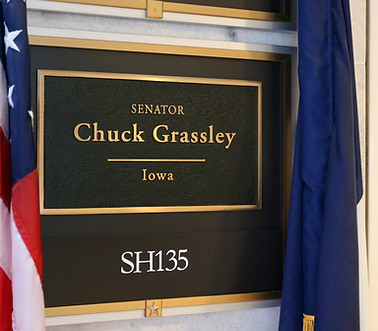
“That’s a real shame.
Congress enacts a tax benefit with the intention of every eligible person taking advantage of that benefit.
I’m very concerned that tens of thousands of taxpayers aren’t taking advantage of the available tax provisions.
Even worse, a lot of paid tax preparers were in the dark.
There’s no point in paying somebody to do your taxes if those folks don’t do you any good.”
Charles Grassley U. S Senator & President Pro Tempore
OVERPAYING YOUR TAXES - WHAT'S THE REAL COST?
With the prevalence of error filled tax returns prepared by leading tax professionals, what are the chances something might be amiss, lacking, or overlooked regarding your taxes?
How much is it really costing you?
And much is it costing others?
How would you really know?
It's likely costing you more than you will ever know. (Render unto Caesar, that which is Caesar’s, unto God, that which is God’s. Mark 12:17)
For example, what's your time worth?
There are only 24 hours in a day. Regardless of one's net worth - we are all time poor.
Perhaps your tax savings would enable more travel or more luxurious private jet travel.
"There are two kinds of people in the world; those that fly private, and those who would if they could." Bill Maher

As for how much your overpaying your taxes may be costing others... it's impossible to really know.
But we can make an educated guess.
Consider an example where someone could reduce their combined federal and state taxes from 50% to a total of 5%.
What good might you do if you could reduce your taxes by 95%?
Also to be included in that calculation must be what good not overpaying your taxes are for the good of the country and benefit of society.
Raising taxes to fund the government is just part of the purpose of the Federal Tax Code.
An equal if not more important purpose is to encourage economic activity by the individual citizens for the common benefit of society and to reduce the obligations of the federal government.
That's why there are tax incentives and deductions to spur private sector job creation, economic development, and charity.

From the government's perspective, it's just as undesirable for citizens to under pay any taxes owed as it is to overpay taxes that are not owed that could have otherwise been put to more productive and efficient application in the private sector.
The true patriot pays all taxes legally required yet no more, but also endeavors as his right and responsibility as a citizen to comply with the government programs for the common good as much as is practicable to pay the least tax allowed by law.
Precious few that seek to enjoy the best that the yachting lifestyle can offer have anyone on their current team of advisors capable and qualified of stewarding such alternative investments– or an advisor sufficiently confident in their abilities and willing to link their compensation to successful performance and achievement of goals.
If you had a uniquely qualified, competent and experienced advisor – that acted almost like a partner – charged with protecting and preserving your net worth, whose long term interest was tied to yours, whose compensation was largely determined by successfully achieving your objectives, and had a strong monetary incentive to assure that your yachting lifestyle was both economically and environmentally sustainable, what could you accomplish, what could you achieve with another set of eyes from a different perspective?
That if your current advisors knew, surely they'd have told you already- wouldn't they?